
Monaco’s interior design story stretches back through centuries, capturing the principality’s journey from humble beginnings to a playground for the world’s elite.
Things really kicked off during the Belle Époque, late 1800s, when Prince Charles III had the Monte Carlo Casino built—suddenly, gilded mouldings, frescoed ceilings, and marble columns became the new normal for luxury here.
That set the tone for everything that followed, and you can still feel the echoes today.

Monaco’s spot on the French Riviera shaped how its interiors evolved over time. From Belle Époque’s ornate details to the clean geometry of Art Deco in the 1920s and ’30s, Monaco always seemed to take what was happening elsewhere and give it a uniquely local twist.
Princess Grace, Aristotle Onassis, and other famous residents brought international flair, raising the bar for what “Monaco style” could mean.
Today, you’ll find interiors that mix old and new—historic flourishes, a dash of sustainability, and the latest tech, all blended together. But that signature elegance? It’s still there, running through everything.
Let’s wander through the eras and see how each one left its mark on Monaco’s interiors, shaping the look and feel of these legendary spaces.
Origins of Interior Design in Monaco

If you dig deep enough, Monaco’s design roots go back to the ancient Greeks and Romans who once roamed the Mediterranean. Their mosaics and frescoes weren’t just art—they laid down the rules for what would look good for generations.
Influence of Ancient Civilisations
Back in the day, the region’s location near major Mediterranean trade routes brought in a swirl of influences from Egypt, Greece, and Rome. These cultures didn’t just want their spaces to work—they wanted them to look good, too.
Egyptians played with symmetry and natural materials, pulling colors like blue, gold, and earth tones straight from their surroundings. They had a knack for organizing rooms by importance, which sounds pretty modern, honestly.
Because Monaco hugged the coast, ideas and styles drifted in with the tides. Wealthy locals picked up tricks from passing traders and craftsmen. You can almost picture the buzz of new ideas mixing with local traditions, shaping a look that was never quite like anywhere else.
Greek and Roman Decorative Arts
Greek and Roman artistry really set the bar early on. The Romans, especially, brought their A-game: villas with planned spaces, each serving a purpose, and a flair for luxury—think imported marble, intricate woodwork, even underfloor heating (they were ahead of their time!).
They loved showing off with gold, marble, and clever ways to bring in light. It wasn’t just about looking rich; it was about making life comfortable, too. Greeks added their own touches—columns, balanced proportions, and sculptures everywhere. Both cultures tried to blur the line between indoors and out, with courtyards and gardens at the heart of their homes.
Legacy of Mosaics and Frescoes
Mosaics and frescoes—those were the showstoppers. Tiny bits of colored stone and glass made up intricate floor and wall patterns, sometimes telling stories from mythology or daily life. Frescoes, painted right onto wet plaster, let artists create entire scenes before the surface dried. The result? Rooms that felt bigger, brighter, and more alive.
Because these techniques were so sturdy, some have survived for centuries, letting us peek into ancient tastes. Archaeologists keep finding these treasures around the Mediterranean, including near Monaco, revealing rich color palettes and a real eye for composition. It’s wild to think how these old methods kept popping up in later design trends, shaping the way walls and floors were decorated for ages to come.
Medieval to Renaissance Developments
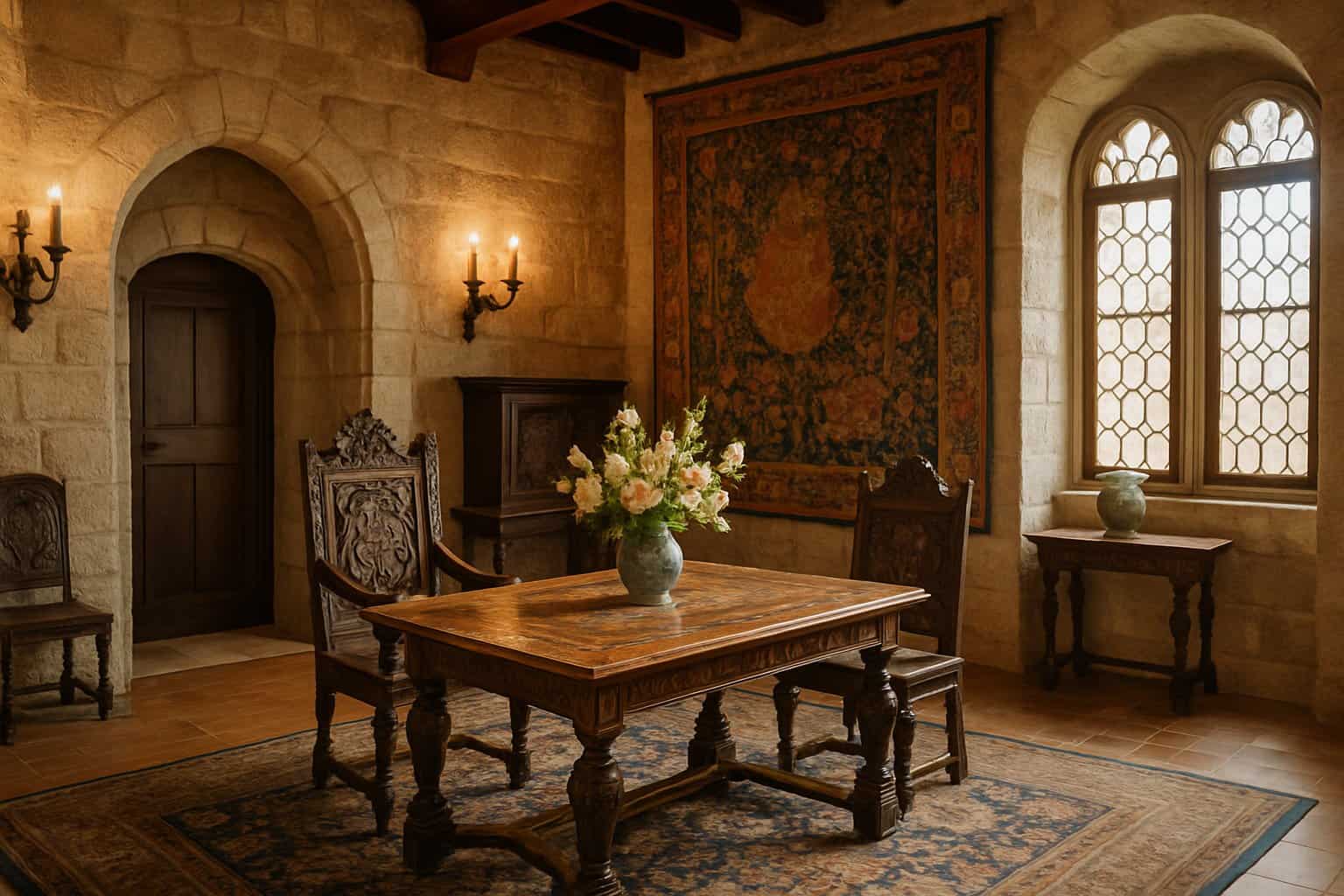
Monaco’s interiors made a big leap between the medieval period and the Renaissance. The shift from fortress to palace changed everything about how rooms looked and felt.
Medieval Period Interiors
Back in the 13th and 14th centuries, function ruled. When the Ghibellines from Genoa took over in 1215, they built for defense—thick stone walls, tiny windows, heavy doors. Not exactly cozy.
Furniture was bare-bones: wooden tables, benches, chests that doubled as storage. Tapestries weren’t just for looks; they kept out the chill and damp.
Rooms connected through stone corridors, and sunlight barely made it inside. You can sense the anxiety of siege, every space built for survival first, comfort a distant second.
Renaissance Period Innovations
Fast forward to the Renaissance, and suddenly Monaco starts to show off a bit. By the late 1400s into the 1600s, international connections brought in fresh ideas and fancy materials. Prince Honoré II—sometimes called the “Prince Builder”—oversaw a lot of this change in the early 1600s.
Interiors got a serious upgrade. Out went plain woodwork, in came intricate carvings and painted ceilings. Carrara marble staircases and ornate fireplaces turned homes into statements of style and wealth.
Rather than just serving a function, rooms became experiences. The Gallery of Mirrors and the Blue Room are perfect examples—art and architecture blending into something that felt new and impressive.
Impact of Italian Renaissance
Italy’s influence was everywhere. Monaco’s closeness to Genoa made it easy for classical ideas to flow in. Suddenly, symmetry and proportion were all the rage.
Italian artisans brought their skills—Murano glass chandeliers, marble decorations, and classical motifs like you’d see in Rome or Athens. The focus shifted from mere practicality to beauty, and displaying art became part of home life.
Evolution of Interior Decoration Techniques
Decorating got a lot more sophisticated, too. Medieval spaces didn’t have much to work with, but by the Renaissance, layers of detail made rooms pop.
Some of the cool new tricks included:
- Gold leaf and gilding on columns and ceilings
- Trompe-l’oeil—those clever painted illusions—on ceilings
- Stucco work that added depth to walls
- Painted panels and murals everywhere
Specialist craftsmen set up shop, forming guilds and workshops. The Prince’s Palace collected works from Breughel, Rubens, Giordano—just to name a few. All this artistry marked Monaco’s transformation from fortress to a hub of culture and taste.
Baroque, Rococo, and Neoclassicism
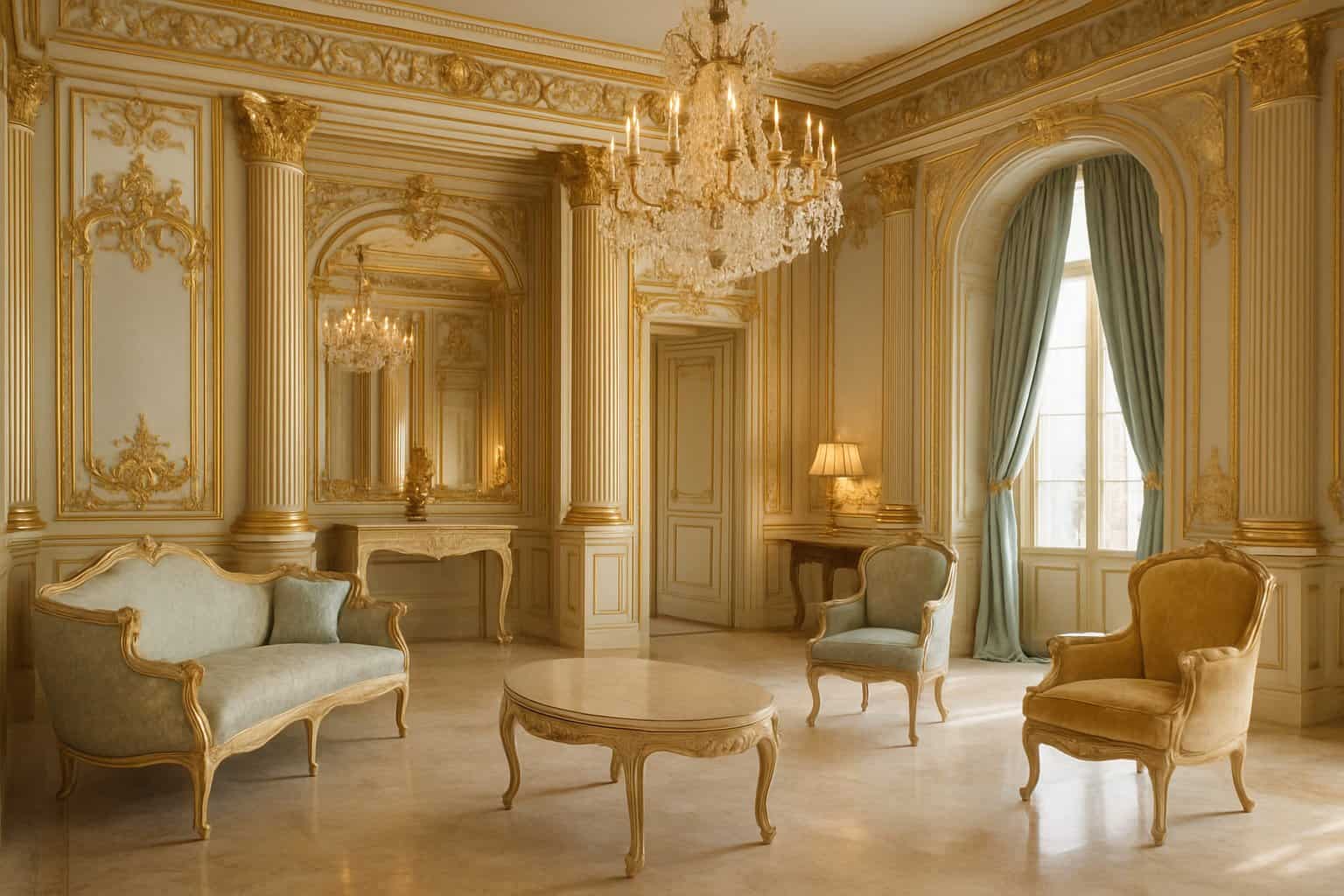
The 1600s and 1700s brought a parade of styles through Monaco—Baroque, Rococo, then Neoclassicism—all leaving their fingerprints on the town’s interiors.
Baroque Design in Monaco
Baroque swept in during the early 1600s, turning up the drama with bold contrasts and over-the-top ornamentation. Local artisans went all in with marble, gold leaf, and velvet. Ceilings became canvases for elaborate frescoes, mouldings grew fancier by the year.
Baroque highlights in Monaco:
- Deep reds and golds for that “wow” factor
- Furniture so heavy and ornate it almost looked like sculpture
- Massive tapestries and paintings
- Light pouring in from carefully placed windows
The richest families hired craftsmen to create grand staircases and reception rooms. These spaces oozed power and status—sometimes almost too much, if you ask me.
Rococo and Rococo Design Influences
By the mid-1700s, Rococo breezed in as a softer, lighter answer to Baroque’s intensity. Pastel colors, playful curves, and delicate details took over. Rooms felt more intimate, less imposing.
Artisans started using shells, flowers, and curling shapes in plasterwork and furniture. Chinoiserie—those fanciful Eastern-inspired touches—showed up in screens and porcelain. Furniture got lighter, with curved legs and more graceful lines. Mirrors and chandeliers bounced candlelight around, making everything shimmer just a bit more.
It was elegance with a wink—refined, but not trying too hard.
Rise of Neoclassicism
Late in the 1700s, Neoclassicism took hold, pushing back against Rococo’s frills. Designers drew straight from Greek and Roman art—think clean lines, symmetry, and classical motifs like laurel wreaths. Colors cooled down to whites, greys, and soft hues.
This style mirrored Enlightenment ideals—order, reason, balance. Homes and public buildings in Monaco embraced a quieter, more thoughtful kind of beauty, letting the architecture speak for itself.
Integration of Artistic Styles
Honestly, these styles didn’t just replace each other—they mingled. Some homes kept Baroque bones but added Rococo touches or Neoclassical furniture. Wealthy residents often updated rooms bit by bit, layering styles as tastes changed.
Local craftsmen became jacks-of-all-trades, adapting their skills to whatever was in vogue (or fit the client’s wallet). This willingness to mix and match gave Monaco’s interiors a richness and depth that’s tough to copy.
Gothic Revival, Eclecticism, and Art Nouveau
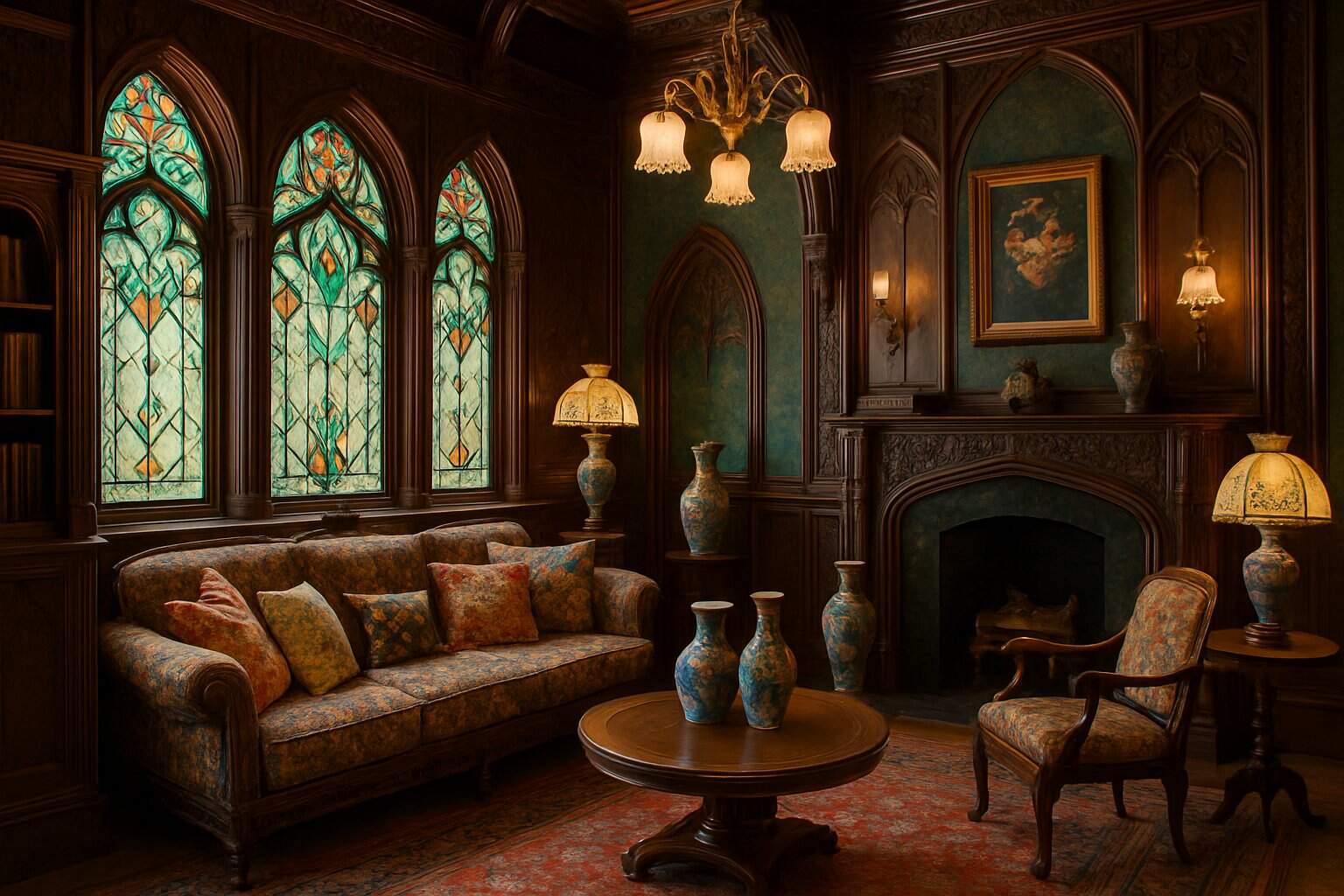
The 1800s and early 1900s shook things up again. Gothic Revival aimed for spiritual depth, Eclecticism mashed together influences from everywhere, and Art Nouveau let nature take the lead with flowing, organic shapes. Each brought its own flavor, and honestly, you can still feel their echoes in Monaco’s interiors if you know where to look.
Gothic Revival Aesthetics
Gothic Revival swept through Monaco’s interiors in the mid-1800s, bringing a love for medieval flair that still lingers in memory. Local designers started weaving in pointed arches, ribbed vaults, and all that ornate tracery—sometimes a little much, but undeniably charming—into homes and churches alike. The movement borrowed freely from centuries-old Gothic forms, yet folks found ways to make them work for the modern world they knew.
A.W.N. Pugin’s passionate writings nudged Monaco’s designers toward a more authentic Gothic Revival. He believed interiors ought to reflect moral and religious values, not just look pretty. Craftsmen took that to heart, carving trefoils, quatrefoils, and even the occasional crocket into furniture and woodwork. You could almost feel the weight of tradition in every detail.
Churches really became the canvas for this style. Stained glass windows burst with bold colors and stories from scripture. Carved wooden screens split up the space, not just for looks but to serve real purposes. These decorative touches meant something—they weren’t slapped on just for show.
Spread of Eclecticism
By the latter half of the 19th century, Eclecticism started making waves in Monaco. This wasn’t about following a single style; instead, designers mixed and matched details from different eras. You’d see Gothic Revival arches rubbing shoulders with Renaissance flourishes, Baroque curves, and classical symmetry—all in the same room, sometimes even in the same piece of furniture.
The middle class in Monaco found eclecticism irresistible. It let people show off their personal tastes and maybe hint at a bit of worldliness. A parlour might pull together Gothic-inspired chairs, Greek Revival moldings, and an Oriental rug, and somehow it all just worked—most of the time, anyway.
Public buildings weren’t shy about eclecticism either. Libraries and town halls along the riverfront blended architectural vocabularies, creating places that looked like nowhere else. There wasn’t a strict movement behind it; folks just enjoyed the freedom to play with history as they pleased.
Adoption of Art Nouveau Principles
In the 1890s, Art Nouveau swept into Monaco with its wild, flowing lines and love for all things natural. The style ditched historical imitation for something fresh—plants, flowers, and organic shapes took center stage. Suddenly, straight edges seemed old-fashioned. Curves and asymmetry were in.
Local artisans didn’t always go all-in, but you’d spot Art Nouveau touches in the details. Metalwork curled into vine shapes. Wallpapers bloomed with stylized flowers. Stained glass shimmered with peacock feathers and lily pads.
Furniture got a real shake-up, too. Chairs and tables sprouted curved legs and backs, almost like they’d grown that way. Cabinet makers started reaching for exotic woods, letting the grain show, and inlaying dragonflies or poppies into the surface. There was a sense of fun and experimentation in the air.
Art Nouveau stuck around in Monaco until about 1910, before folks started craving something simpler.
Modernism, Mid-Century, and Contemporary Design
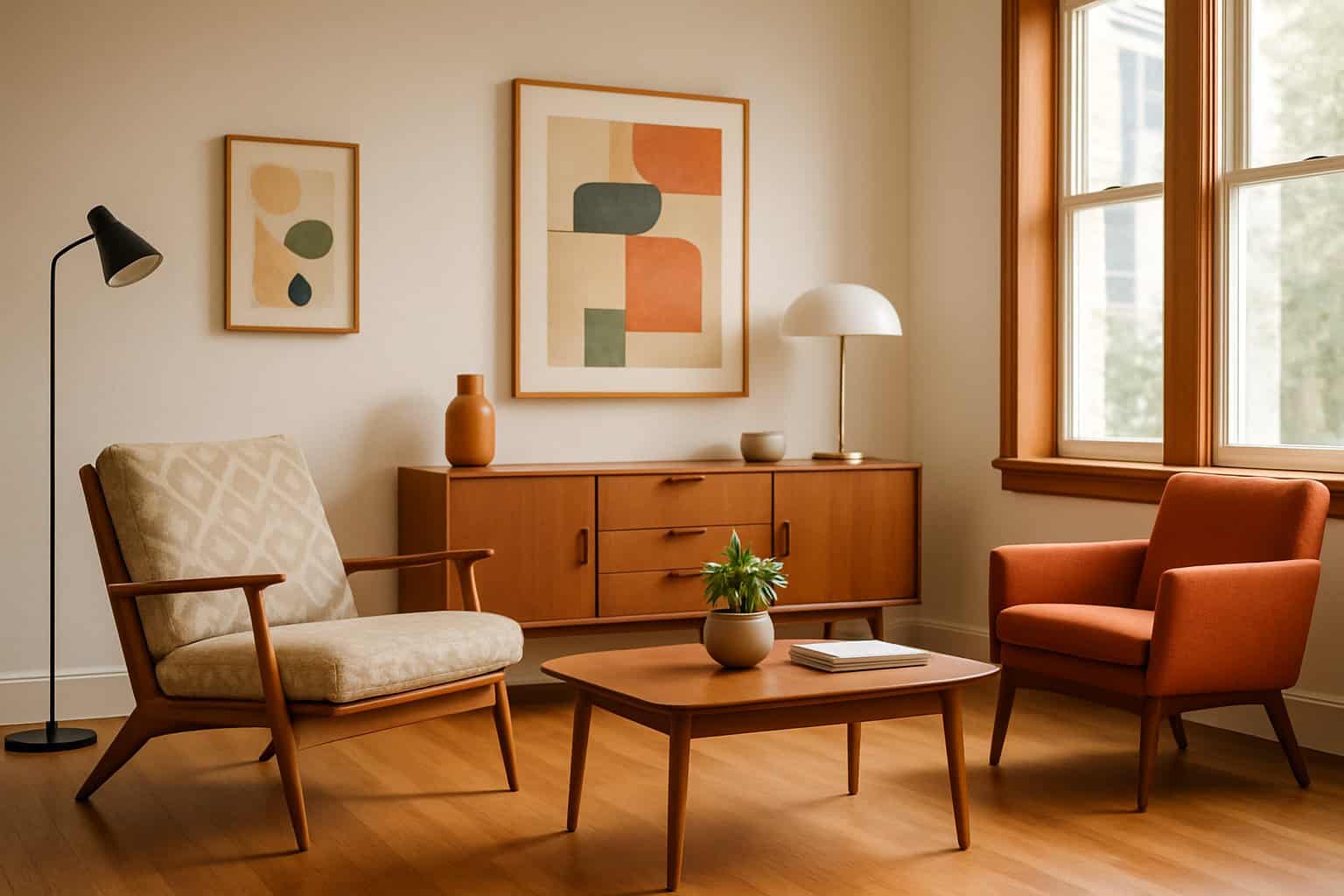
By the mid-20th century, Monaco’s interiors changed course yet again. Modernism arrived with its crisp lines and no-nonsense attitude, breaking away from the fussiness of earlier times. Designers in town started to embrace Bauhaus ideas and Mid-Century Modern flair, eventually drifting toward the minimalist styles you’ll see today.
Modern Interior Design in Monaco
In the 1940s and 1950s, Monaco’s designers took up modernist principles in earnest. Ornate Victorian details faded, replaced by a focus on function and simplicity. It felt like a breath of fresh air.
Post-war optimism meant people had the means to update their homes. Open floor plans took the place of cramped, boxy rooms, and big windows finally let the sunlight pour in. Along the riverfront, new buildings went up with steel, glass, and concrete—materials that looked forward, not back.
Monaco’s industrial roots shaped this new style. Factory workers and business owners liked the practicality of modern design—straightforward furniture, exposed joinery, nothing too fancy. It just made sense for the way people lived.
Influence of Bauhaus School
Bauhaus’s “form follows function” mantra really struck a chord with Monaco’s working-class neighborhoods. Designers set aside decoration for usability, creating spaces that worked for real life, not just magazine spreads.
Furniture makers in town started experimenting with bent plywood and tubular steel in the 1950s. These materials were affordable, tough, and looked sharp. Before long, Monaco homes, offices, and public spaces filled up with these new pieces.
Monaco’s manufacturing know-how came in handy here. Workers who spent their days on the factory floor brought that same practical approach home. Built-in storage and multipurpose furniture became staples in the borough’s smaller houses.
Mid-Century Modern Contributions
Charles and Ray Eames left their mark on Monaco with those iconic molded plywood chairs. By the late ’50s, local showrooms showed off their sleek, comfortable designs—perfect for families who wanted style that didn’t sacrifice comfort.
Eero Saarinen brought organic shapes to Monaco’s commercial spaces. His pedestal tables and chairs popped up in restaurants and offices, proving modern design could feel inviting instead of cold. There’s something about his work that just fits a bustling workspace.
Monaco’s Mid-Century Modern interiors had a few standout traits:
- Clean lines with hardly any fuss
- Organic shapes that felt pulled from nature
- Mixed materials—wood, metal, and plastic all got along
- Bold colors in fabrics and accents
- Blurring the lines between indoors and out
Builders started using flat roofs and long, low lines along Ohio River Boulevard. Sliding glass doors opened up living rooms to gardens and patios, making summer evenings something special.
Contemporary and Minimalist Trends
In recent years, Monaco’s style has leaned hard into minimalism. People seem to crave calm, uncluttered spaces with a focus on quality over quantity—maybe a response to all that earlier maximalism.
Newer homes tend toward open layouts and fewer walls. White or pale grey walls set the stage for carefully chosen furniture. Natural wood and stone sneak in some warmth, so things never feel too stark.
Minimalism in Monaco isn’t quite the same as in big cities. Folks still need practical storage, but decorative objects are pared down to the meaningful or sentimental. Designers help families find that sweet spot between simplicity and the realities of everyday life.
Smart home tech now hides behind the scenes—wires tucked away, gadgets built right in—so the clean look stays intact. Sustainable materials and energy-saving fixtures have become more common, reflecting a growing concern for the environment around town.
Professionalisation and Current Trends
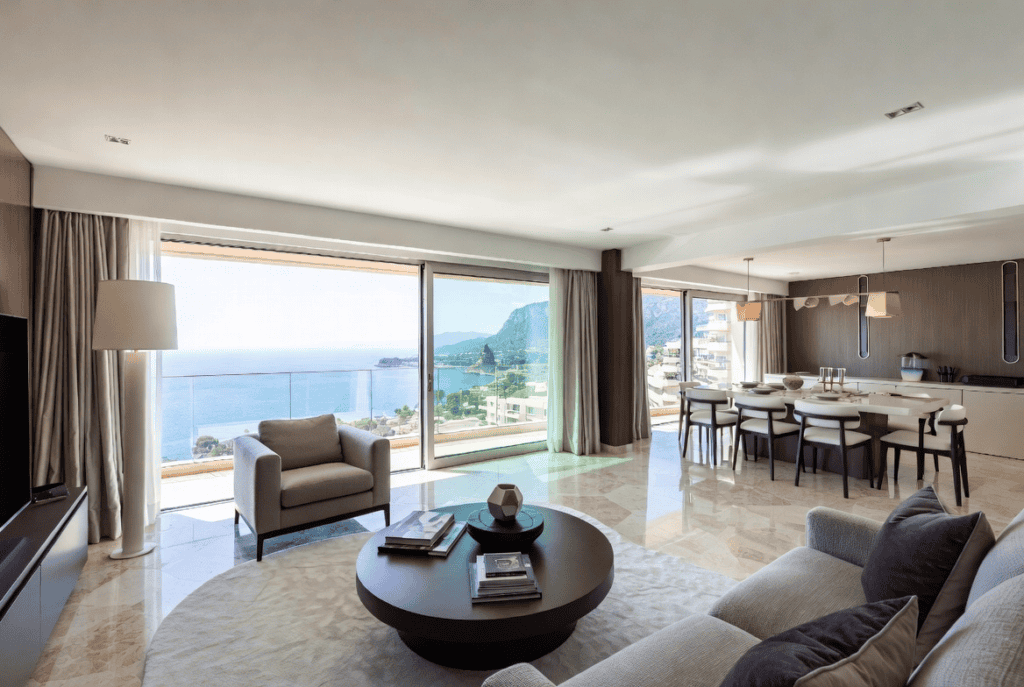
Monaco’s interior design scene grew up over the decades, moving from casual decorating to a regulated profession with real standards and credentials. Today, the industry blends sustainability with the principality’s signature luxury—thanks in part to professional organizations and a new wave of design thinking.
Emergence of the Interior Designer
The role of interior designer in Monaco really changed in the late 20th century. What started as informal advice and decorating evolved into a respected career that needs formal training. These days, designers complete specialized education in spatial planning, materials science, and building codes—no shortcuts.
Monaco’s designers juggle aesthetics and technical know-how. They team up with architects, engineers, and contractors to shape functional, luxurious spaces. The job calls for expertise in lighting, acoustics, and environmental controls—sometimes it feels like you need to know a little of everything.
Many local designers study at top European schools before setting up shop in Monaco. Their projects run the gamut from yacht interiors to penthouse revamps. This shift toward professionalism mirrors trends across Europe, though the local flavor never quite disappears.
Role of Professional Organisations
Groups like the NSID (National Society of Interior Designers) and AID (American Institute of Interior Designers) set the bar for the industry worldwide. Monaco’s designers often join these organizations, which lay out ethical guidelines and competency standards.
Membership means access to continuing education, networking, and advocacy. Designers get trade resources, supplier contacts, and insurance—handy perks in a competitive field.
Certification from these bodies helps clients tell the pros from the amateurs. In Monaco’s luxury market, those credentials really matter. The organizations also keep designers in the loop about new materials and techniques, especially for high-end projects.
Accessibility and ADA Considerations
Monaco’s designers have started weaving universal design principles into their work, even though the city’s tight layout poses a challenge. ADA rules are American, but similar European standards influence projects here.
Modern luxury developments now include wider doors, adjustable counters, and barrier-free showers—features that don’t spoil the look but make spaces more welcoming. Designers choose materials with the right textures and slip resistance, too.
Accessibility touches show up in lighting controls, door hardware, and how people move through a space. Designers have to balance the rules with clients’ wishes for open layouts and clean, minimalist details. It’s a puzzle, but when it comes together, the results feel just right.
Eco-Friendly Materials and Sustainability
Funny how things change—sustainability wasn’t always at the heart of Monaco’s design scene, but now it’s almost a given, especially with big projects like Mareterra. Designers lean into reclaimed wood, recycled metals, and those low-VOC finishes that don’t stink up the place. It’s all in service of the planet, but let’s be honest, no one’s giving up an ounce of luxury.
There’s something timeless about limestone floors or the warmth of sustainable hardwoods under your feet, and Monaco interiors love those touches. Organic textiles pop up everywhere, too. People are swapping out old bulbs for energy-efficient lighting, and you’ll find smart home gadgets quietly cutting down on waste. Water-saving fixtures sneak into bathrooms and kitchens—sometimes you barely notice, but hey, every drop counts.
You get the sense that Monaco’s really trying here. The principality’s push for sustainability keeps designers hunting for certified green materials and anything local. There’s a delicate dance between eco-responsibility and those sky-high client expectations. Still, the way innovation keeps opening doors for sustainable luxury? It’s honestly kind of exciting, even if it makes you wonder what’s coming next.
Leave a Reply